HOW CHEESE KING HELPS PIZZA SHOPS CUT COSTS
Running a pizza franchise means balancing quality, speed, and cost control. One of the biggest hidden expenses in every pizza kitchen is cheese waste. Cheese is the most expensive ingredient in a pizza, and even a little too much on every pie adds up fast. That’s why high-volume pizza shops are turning to smarter portion control solutions such as Cheese King by Label King Turbo.
Cheese King is a programmable digital smart scale designed specifically for pizza kitchens that need accuracy and speed. It ensures the perfect amount of cheese every time—helping operators cut food costs, improve consistency, and train new team members faster. The best part? It can pay for itself in the first month.
What Is Cheese King?
Cheese King is a digital portion control scale built for pizza kitchens where every ounce matters. It can be used as a standalone tool or paired with Job Aid Turbo, Label King Turbo’s digital kitchen guide that provides step-by-step prep instructions and visual cues for staff.
When connected to Job Aid Turbo, Cheese King displays on-screen prompts showing the exact amount of cheese each pizza should have. As team members add cheese, the scale gives real-time feedback until the correct weight is reached. The process eliminates guesswork and prevents over-portioning—one of the main sources of food waste in busy pizza kitchens.
Why Cheese Waste Hurts Profits
Every pizza shop operator knows that cheese is a top cost driver. A few extra ounces per pizza might not seem like much, but multiplied across hundreds or thousands of pizzas a week, it becomes a serious expense.
Cheese waste happens for simple reasons: employees eyeball portions during a rush, training is inconsistent, and prep lines get hectic. Even experienced staff can overestimate without realizing it. Spoilage, sticking, and mistakes during peak hours all lead to lost revenue. With food costs higher than ever, every ounce matters.
How Cheese King Reduces Waste
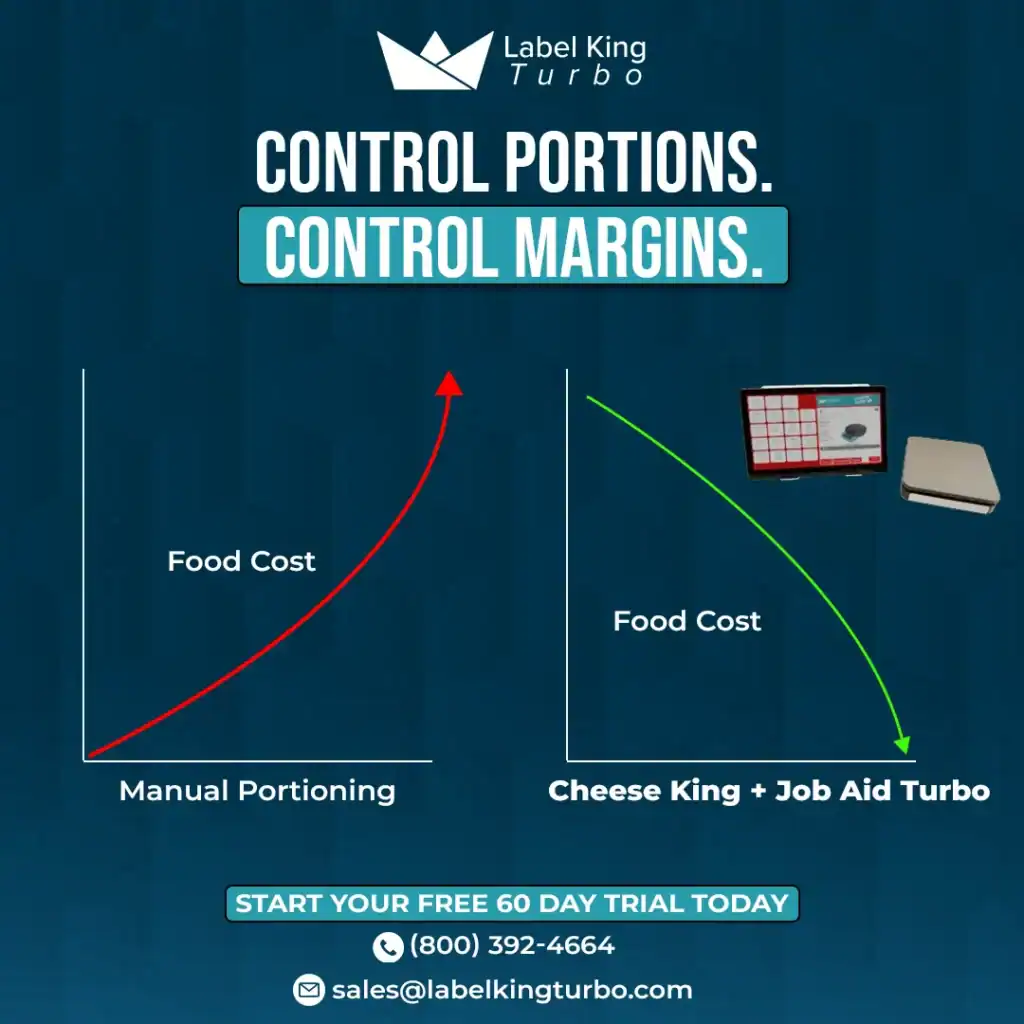
Cheese King makes portion control simple. Each pizza can be programmed with a specific target weight of cheese. As the operator adds cheese, the digital screen displays progress in real time and provides a visual cue when the perfect amount is reached. This prevents overuse and keeps every pizza consistent—no matter who’s making it.
For multi-unit operators and franchise owners, consistency is everything. Cheese King ensures every location follows the same portioning standards. That not only protects profit margins but also keeps customers happy with a consistent product across stores.
Training Made Easy with Job Aid Turbo
When paired with Job Aid Turbo, Cheese King becomes part of a complete smart kitchen system. Job Aid Turbo provides digital, on-screen recipes and preparation steps so new staff can learn faster and make fewer mistakes. The built-in prompts show how much cheese to add and alert the user when the target weight is reached.
This helps new employees get up to speed quickly and makes training more consistent across teams. Instead of relying on verbal instruction or printed charts, everything is automated and displayed on-screen—saving time and improving accuracy.
Real Savings in the First Month
Because cheese is such a large part of pizza costs, the savings from accurate portioning add up quickly. Even a reduction of one ounce per pizza can translate into thousands of dollars in monthly savings for a busy franchise. Many operators find that Cheese King pays for itself within the first month of use.
Beyond cost savings, precise portioning improves kitchen flow, reduces waste disposal costs, and keeps food inventory predictable. It’s a simple change that makes a measurable impact on the bottom line.
Designed for High-Volume Pizza Kitchens
Cheese King was designed for pizza kitchens where speed and consistency are critical. The digital scale is durable, easy to clean, and built for the fast pace of pizza operations. Whether used as part of Job Aid Turbo or as a standalone smart scale, it helps operators standardize portioning and reduce food waste across every location.
Why Cheese King Matters
For franchise owners, consistency is more than a goal—it’s the foundation of brand success. Every customer expects their favorite pizza to taste the same, every time, at every location. Cheese King ensures consistency while protecting margins from unnecessary waste.
By using smart portion control tools like Cheese King and Job Aid Turbo together, operators can finally eliminate guesswork, improve training, and save money. In a business where every topping counts, precision pays off.
Learn more about Cheese King and Job Aid Turbo at Label King Turbo.
Start With a Portion Baseline
Before changing a portioning process, measure what is happening now. Select a representative sample of pizzas across different sizes, shifts, and team members. Weigh the cheese or topping portion before it goes on the pie, record the target, and compare the actual amount with the standard. The goal is not to single out one employee; it is to see how much variation the current process creates.
Keep the baseline simple enough to repeat. Track the menu item, target weight, actual weight, and whether the difference was an over-portion or under-portion. A few days of observations can show whether the main issue is a consistently high target, wide shift-to-shift variation, or occasional mistakes during the rush.
Set Portion Standards the Team Can Follow
Each pizza size and topping combination should have a clear portion standard that matches the recipe and the finished product your customers expect. Document the target in the same place the team sees the preparation instructions. If a recipe changes, update the standard and the training material together so the scale and the employee are not working from different instructions.
Portion control is not only about using less cheese. An under-portioned pizza can create quality problems, remakes, and an inconsistent customer experience. The useful standard is the amount that produces the intended product while controlling avoidable variation. Managers should review customer feedback, waste, and production results before changing a target.
Use the Rush to Improve the Process
A portioning process that works during a quiet prep period may break down during a dinner rush. Keep the scale positioned where the team can use it without crossing the line or blocking another station. Make the target feedback easy to read, keep the ingredient container within a consistent reach, and decide who is responsible for correcting an out-of-standard portion.
When a team member misses the target, treat it as a process signal. Check the recipe, scale setup, ingredient container, and on-screen instruction before assuming the problem is training. A short coaching loop—show the target, make one practice portion, and verify the result—usually creates a better habit than correcting a full shift of pizzas after the fact.
How to Evaluate Cheese Savings
After the new process is in place, compare like with like. Use the same menu mix and a similar number of pizzas when comparing cheese usage, and account for spoilage, prep loss, remakes, and product left in containers. Review the result by shift and location so a single busy week does not create a misleading conclusion.
A simple review can include:
- Cheese purchased and used per 100 pizzas.
- Average portion variance from the approved target.
- Waste, spoilage, and remake quantities.
- Training time for new team members to reach the standard.
- Customer or manager reports of inconsistent portions.
Accurate measurement helps an operator decide whether the improvement comes from tighter portions, less waste, faster training, or a combination of the three. Results will vary by menu, volume, ingredient cost, staffing, and starting level of portion variation, so savings should be calculated from the restaurant's own data rather than promised in advance.
Keep Standards Consistent Across Locations
Multi-unit operators can use the same recipe standards, training prompts, and review method at each store while still allowing managers to document local issues. Compare locations using the same definitions and reporting period. If one shop has higher variance, investigate equipment placement, ingredient handling, training, and shift coverage before changing the standard for every location.
Cheese King can be used as a standalone portioning tool or paired with Job Aid Turbo for guided preparation. In either setup, the technology works best when the written recipe, target weight, manager review, and corrective-action process all agree. The scale supports the standard; it does not replace a well-maintained recipe or engaged kitchen leadership.
FREQUENTLY ASKED QUESTIONS
- How does Cheese King help pizza shops control food costs?
- Cheese King uses a programmed target weight and real-time feedback to help team members portion cheese consistently. More consistent portions can reduce avoidable over-portioning and make ingredient usage easier to measure, but actual savings depend on the restaurant's volume, recipes, ingredient costs, and starting level of waste.
- Can Cheese King be used for toppings other than cheese?
- The article focuses on cheese portioning, but the same target-weight workflow can support other ingredients when the recipe and equipment setup are appropriate. Operators should define a separate standard for each ingredient or menu item rather than assuming one target fits every topping.
- Does Cheese King replace employee training?
- No. It provides a clearer standard and immediate feedback, which can make coaching and onboarding more consistent. Teams still need instruction on recipes, food safety, equipment use, and what to do when a portion or product is outside the approved standard.
- Can Cheese King work with Job Aid Turbo?
- Yes. Cheese King can be used on its own or paired with Job Aid Turbo. Job Aid Turbo can present preparation steps and target amounts while the scale helps the team member measure the portion at the workstation.
- How should a pizza shop measure whether portion control is saving money?
- Establish a baseline, then compare similar periods using cheese purchased and used per 100 pizzas, average portion variance, waste, spoilage, remakes, and training time. Review results by shift and location, and account for menu mix and volume before attributing a change to portion control.